Stamped concrete in Murrieta CA: where it goes
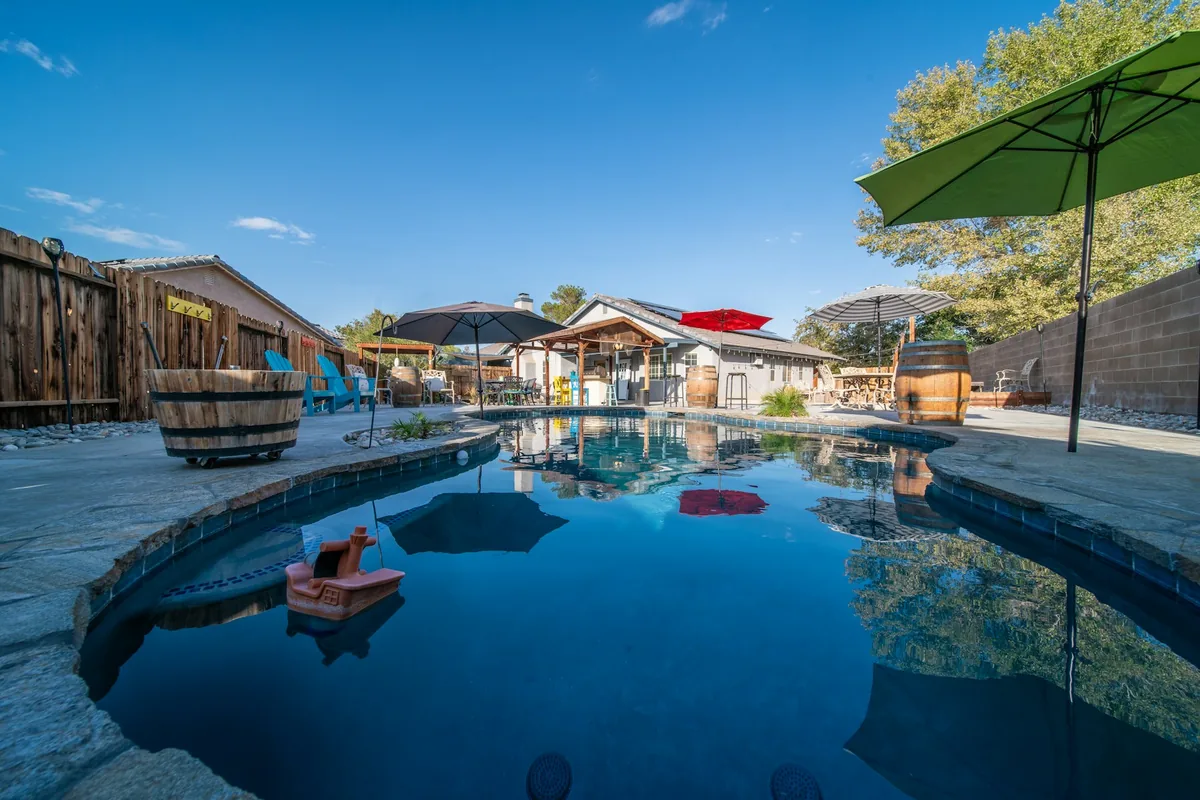
In Murrieta stamped concrete mostly goes behind the house: a patio that runs out from the slider, a deck around a pool, a path to the side gate. Out front it shows up as a border or ribbon on a plain driveway, or a walk to the door, where a full stamped driveway would be the costlier way to get the same look from the street.
- Patios and covered-patio floors, plain field with a stamped border or stamped all over.
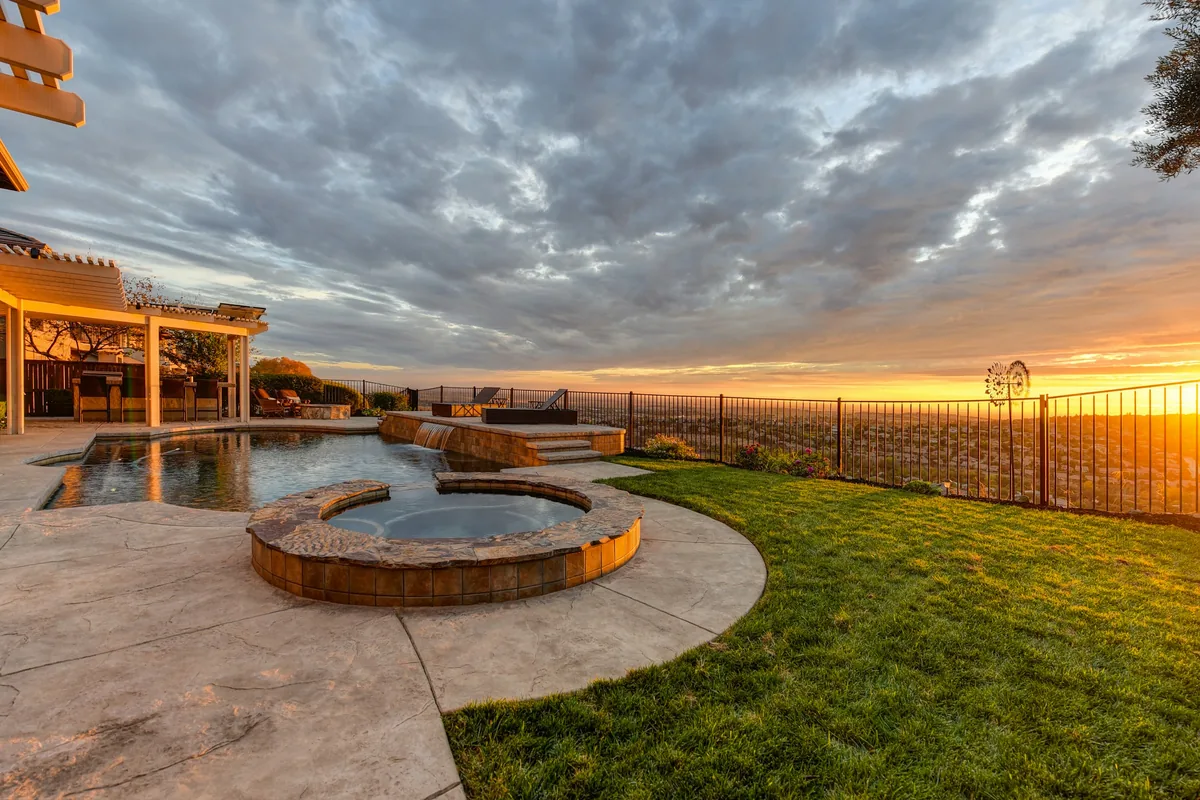
- Pool decks, in light colors with a grit additive in the sealer.
- Front walks and entry landings that match the house's stone or tile.
- Driveway borders, ribbons and aprons inside the lot (the City approach itself stays plain).
- Steps and landings, with the pattern carried down the risers.
Stamped concrete prices in Murrieta
Stamped concrete costs more than plain because it adds color, release agent, a stamping crew working against the set of the concrete, and sealer. The two 2026 guides below price it differently, and the gap is the level of detail.
| Job | Price | Source |
|---|---|---|
| Basic: one pattern, one color | $10 to $14 per sq ft | Concrete Network |
| Mid-range: borders or a contrasting pattern | $14 to $20 per sq ft | Concrete Network |
| Custom: several colors, hand detailing | $20+ per sq ft | Concrete Network |
| Stamped patio, full range | $9 to $30 per sq ft | HomeGuide |
| 12 x 12 patio, stamped or stained | $1,150 to $4,300 | HomeGuide size table |
| 20 x 20 patio, stamped or stained | $3,200 to $12,000 | HomeGuide size table |
| Stamped driveway, mid-range | $15 to $20 per sq ft | HomeGuide driveway guide |
| Decorative overlay on a sound slab | $6 to $20 per sq ft | HomeGuide resurfacing guide |
Concrete Network stamped concrete guide (2026); HomeGuide 2026 cost guides for concrete patios, driveways and resurfacing. National ranges; quotes vary by site.
Patterns, colors and the Murrieta sun
Patterns that suit the houses here
Many Murrieta tracts are stucco under tile roofs in tans, terracotta and gray, and the patterns that sit well beside them are the stone ones: ashlar slate, random flagstone and cobble. Wood-plank stamps work for a pergola floor. Brick and herringbone suit a border more than a whole patio.
Color and heat
Lighter colors reflect more sun and stay cooler to bare feet, which matters on a pool deck in a place that averages 123 days a year at 90°F or more. Deep reds and charcoals look rich in a photo and get hot in August, so a common choice for a pool deck is a light base color with a darker release for depth.
Sealer and grip
The sealer protects the color and needs renewing every two to three years. A film-forming sealer can make the surface slick when wet, so near a pool or on a sloped walk a fine grit additive goes into it. Concrete Network's stamped concrete guide covers both points.
How stamped concrete is poured
- 1Pick the pattern and colors
Choose the stamp (ashlar slate, random flagstone, cobble, brick, wood plank), a base color and a release color, from samples seen in daylight, and get the HOA's sign-off if the tract needs it.
- 2Build the slab like any other
Base, forms, steel and slope come first: a stamped patio is still a 4 inch slab that has to drain away from the house.
- 3Color the concrete
Color goes in the truck (integral color) or is broadcast on the fresh surface as a color hardener, then a release agent is spread so the mats don't stick.
- 4Stamp at the right moment
The mats go down in sequence once the slab is firm enough to hold an edge, and the borders and corners are finished with hand tools.
- 5Wash, cut joints and seal
After curing, the release is washed off, control joints are cut along pattern lines, and the sealer goes on, with a grit additive where the surface gets wet.
Timing decides a stamped job: in summer the slab firms up fast, so the pour starts at first light and the stamping crew is ready before the truck arrives. The hot weather guide explains the limits.