Concrete repair in Murrieta CA: what can be fixed
Concrete in Murrieta takes the usual hits, cars at the edge of the driveway, roots from street trees, a sprinkler line that leaks for a summer, and one local one: pockets of expansive clay that swell in a wet winter and shrink in a dry summer. Most of the damage that follows can be fixed without starting over.
- Cracks in driveways, walks and patios, routed, filled and sealed.
- Broken corners and edges, rebuilt or cut back to a clean line.
- Trip edges where a panel has dropped below the next one or the sidewalk.
- Worn, stained, pitted, flaking or spalling tops, resurfaced.
- Failed or missing joints, cleaned out and resealed.
- Single sunken or heaved panels, cut out and repoured.
Reading the crack before fixing it
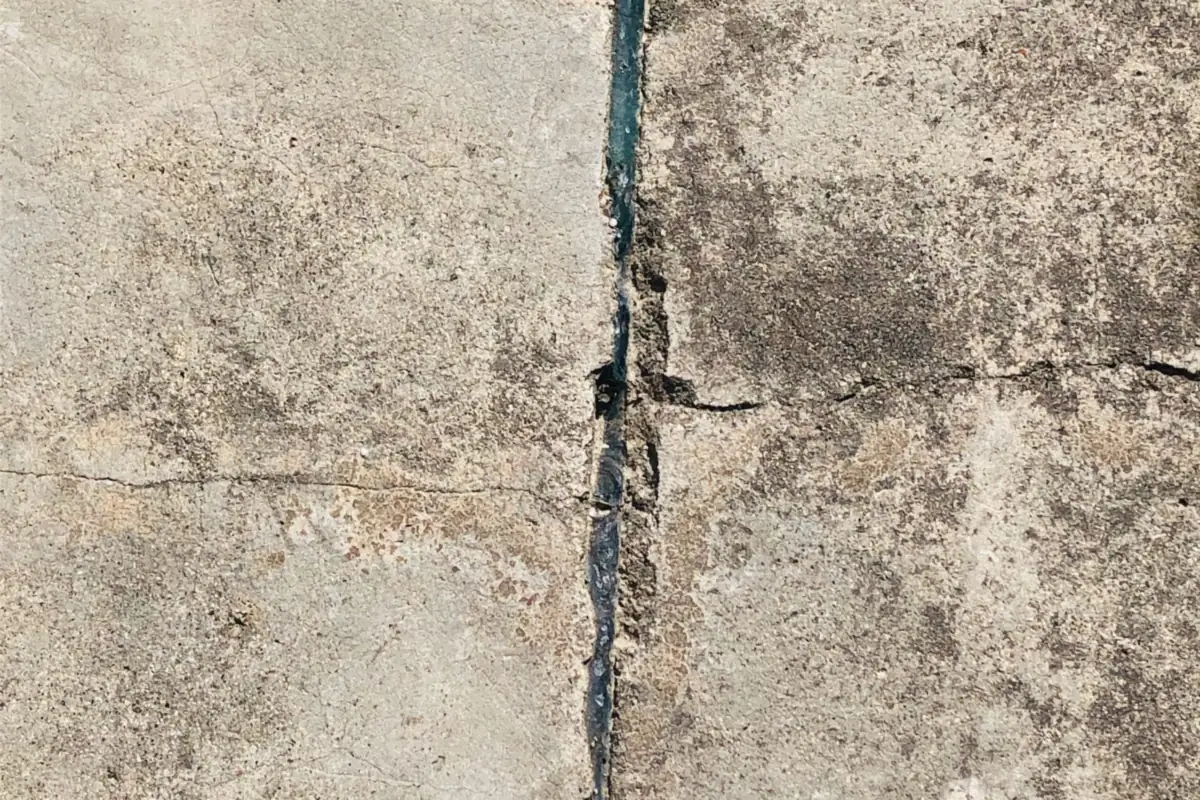
The shape of the damage says what caused it, and the cause decides whether a repair will last. The National Ready Mixed Concrete Association's guidance on cracking in slabs names missing or late joints, a poorly prepared base and fast surface drying as the common causes; in Murrieta, wet clay belongs on the list.
| What you see | Likely cause | Usual fix |
|---|---|---|
| Fine map cracking across the top | Plastic shrinkage or a surface that dried too fast | Clean and seal, or resurface |
| One straight crack between joints | Joints too far apart or cut too late | Rout and seal; it is usually cosmetic |
| Crack with one side higher | Base settled or clay swelled under one side | Cut out and repour the panel on a rebuilt base |
| Broken corner or edge | Load at an unsupported edge, often a car tire | Patch or replace the corner section |
| Crack that keeps widening | Water under the slab or soil movement | Fix the water source, then replace |
| Flaking, pitted top | Finishing with bleed water on the surface, or too little curing | Resurface a sound slab |
Causes from NRMCA Concrete in Practice 2 (Scaling), CIP 4 (Cracks in Concrete) and CIP 5 (Plastic Shrinkage Cracking); fixes are the standard repair choices. A slab over expansive clay can move again if the water that triggered it isn't dealt with.
Repair, resurface or replace: what each costs
The cheapest lasting fix is the one that matches the damage. Sealing a stable crack costs little; resurfacing renews a whole worn top; replacing is for concrete that has moved.
| Job | Price | Source |
|---|---|---|
| Driveway repairs, by severity | $3 to $25 per sq ft | HomeAdvisor |
| Resurfacing a sound slab | $3 to $7 per sq ft | HomeGuide |
| Resurfacing a two-car driveway | $1,200 to $2,900 | HomeGuide |
| Concrete step repair | $300 to $800 | HomeGuide |
| Tear out and replace a panel | $8 to $18 per sq ft | HomeGuide |
| Sealing after repair | $1 to $3 per sq ft | HomeGuide |
HomeAdvisor concrete driveway guide (June 2026); HomeGuide concrete resurfacing, steps, removal and slab guides (2026). National ranges; quotes vary by site.
Lifting a sunken slab by pumping grout or foam under it (mudjacking or foam leveling) is a separate trade that we don't offer; HomeGuide prices it at $3 to $6 and $5 to $25 per square foot. It can save a level-but-dropped panel, but it doesn't fix a broken one or the clay that moved it. The clay soil guide explains the ground side.
The sidewalk and curb in front of the house
A cracked public sidewalk or a dropped driveway apron sits in the City's right-of-way, so in Murrieta any repair to it, a patch included, needs an encroachment permit under Municipal Code 15.54.040.B. California's Streets and Highways Code (section 5610) puts the upkeep of a sidewalk on the owner of the lot it fronts unless a city has taken that on, so it is worth asking the Engineering Division at (951) 461-6077 who handles a given stretch before work starts. The Murrieta driveway permit guide and the driveway approach page cover the apron.
How a repair is done
- 1Find the cause
Look at where the crack runs, whether the two sides sit level, and what water does around it: a crack over wet clay or a broken sprinkler line comes back unless the water is dealt with.
- 2Choose the fix
Seal a stable hairline crack, patch a broken corner, resurface a worn but sound slab, or cut out a panel that has moved.
- 3Prepare the concrete
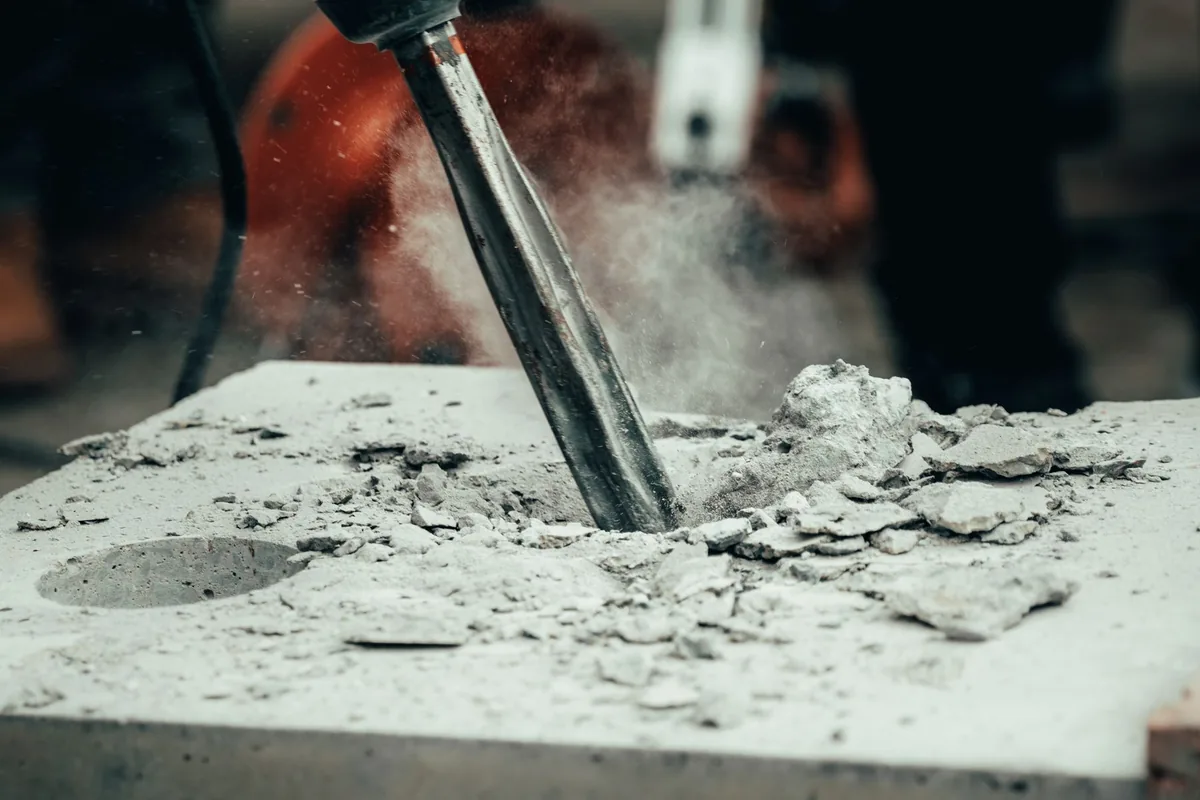
Cracks are routed open and cleaned; a slab to be resurfaced is pressure washed and ground or etched so the new layer bonds.
- 4Repair or repour
Fill and tool the crack, rebuild the corner, trowel the resurfacer, or saw-cut, break out and repour the panel on a rebuilt base.
- 5Cure and seal
Repairs and new panels are kept moist or under curing compound, and a sealer goes on where the surface calls for one.