Last reviewed November 2026. Sources are linked at the end of the page.
The Murrieta heat calendar
Murrieta's NOAA-listed stations record rainfall only, so the nearest station with temperature normals is the yardstick: NOAA's Elsinore station, about seven miles northwest of Wildomar. Its 1991-2020 normals show a long, dry summer:
| Month | Average high | Days 90°F+ | Days 100°F+ | Rain |
|---|---|---|---|---|
| January | 65.7°F | 0 | 0 | 2.97 in |
| February | 67.1°F | 0.5 | 0 | 2.85 in |
| March | 71.5°F | 0.9 | 0 | 1.49 in |
| April | 76.5°F | 3.4 | 0.1 | 0.54 in |
| May | 82.0°F | 8.3 | 1.4 | 0.21 in |
| June | 90.2°F | 17.7 | 4.2 | 0.07 in |
| July | 96.5°F | 27.7 | 11.7 | 0.18 in |
| August | 97.8°F | 29.0 | 15.3 | 0.06 in |
| September | 93.2°F | 23.3 | 8.5 | 0.17 in |
| October | 83.1°F | 10.5 | 1.3 | 0.51 in |
| November | 73.2°F | 1.7 | 0 | 0.59 in |
| December | 65.0°F | 0 | 0 | 2.01 in |
Swipe sideways to see every column.
NOAA NCEI monthly normals 1991-2020, station USC00042805 (Elsinore, CA), read November 24, 2026. Year: 123 days at 90°F or more, 42.3 at 100°F or more, 11.65 in of rain, 9 nights at or below 32°F.
June through September carries most of the year's 90°F days and almost none of its rain. November through April is the easy season for concrete, with highs in the 60s and 70s, while December through February brings most of the rain, so winter pours are timed around storms rather than heat.
What heat does to fresh concrete
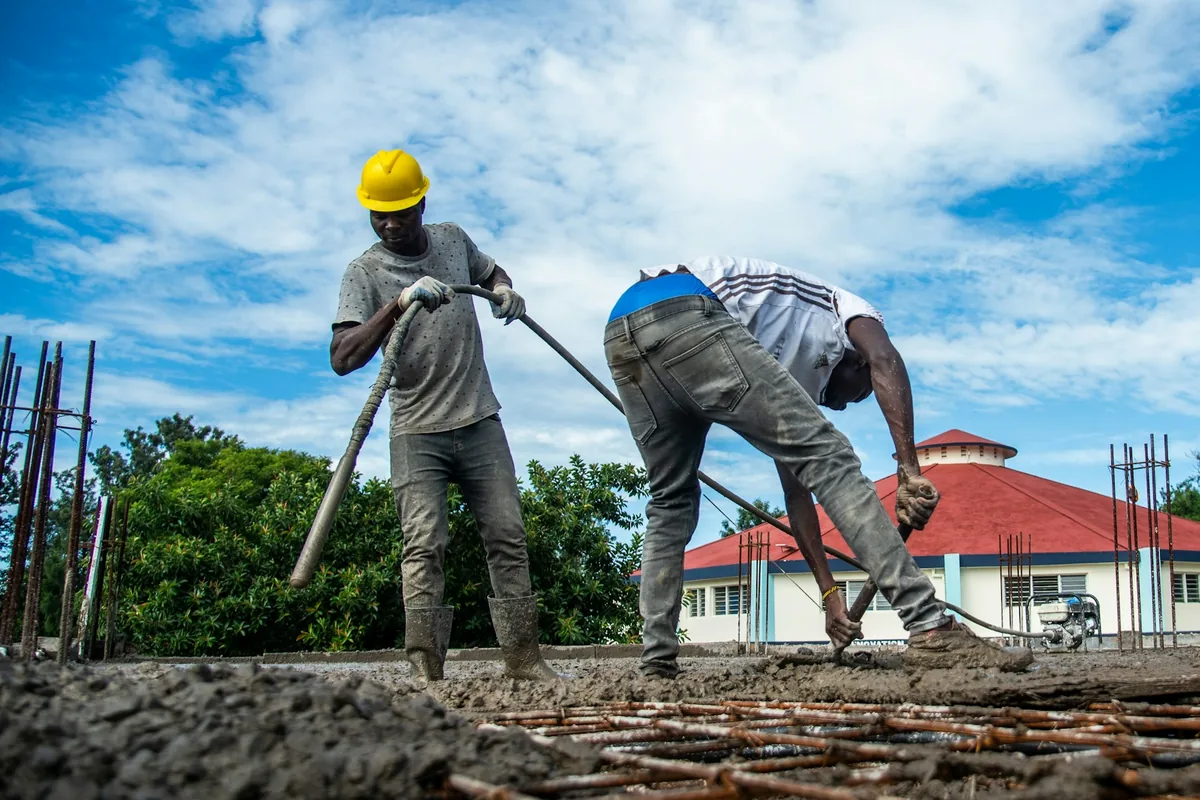
Hot weather, as ACI 305R defines it, is any mix of high air temperature, high concrete temperature, low humidity, wind and sun that speeds moisture loss. NRMCA lists what follows: the mix needs more water to stay workable, it loses slump and sets sooner so the finishing window shrinks, and water evaporating off the surface faster than it bleeds up causes plastic shrinkage cracks. A hot day followed by a cool night adds thermal stress on top.
Wind and dry air
Heat isn't the only trigger. NRMCA names wind over 5 mph and low humidity, with high temperature, as the conditions that drive plastic shrinkage cracking, and dry, windy days can happen here in any season. Windbreaks, sunshades, a fog mist over the slab or an evaporation retarder are the remedies when the forecast calls for them.
How summer pours are run in Murrieta
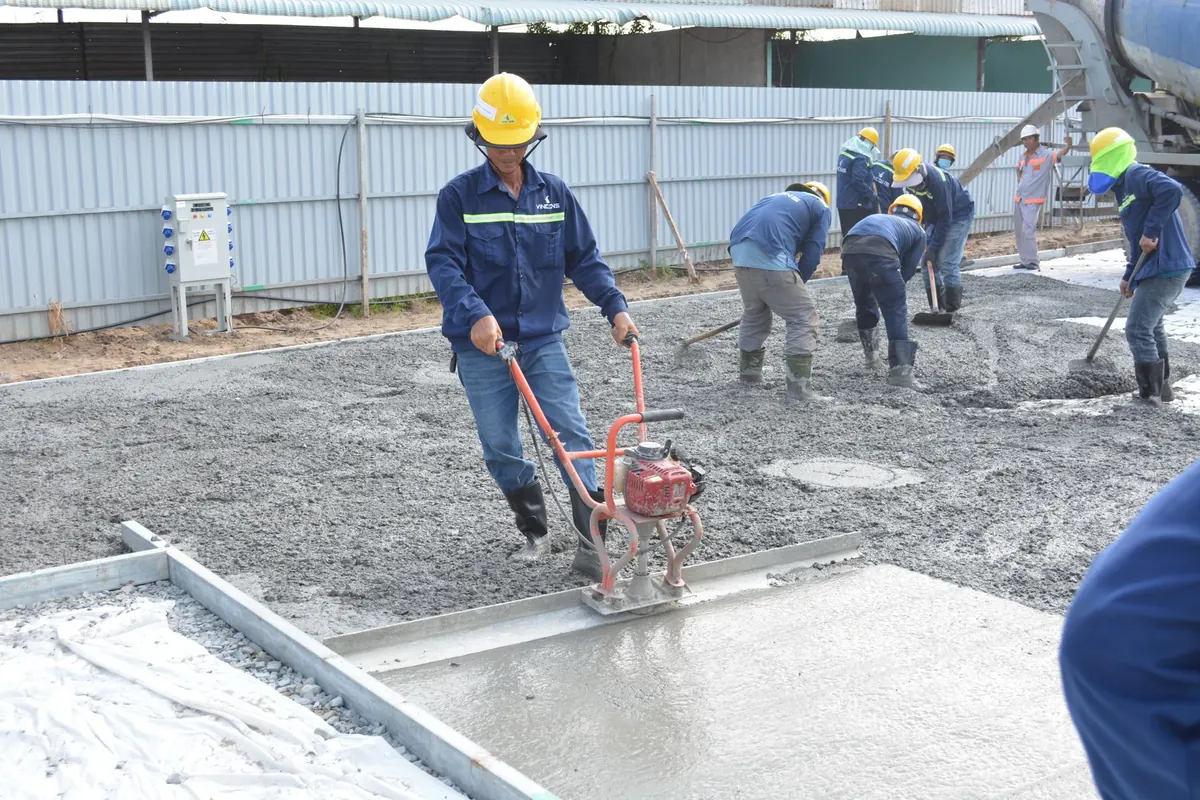
- Schedule the trucks for first light, with enough people to place and finish without waiting.
- Ask the plant for its hot-weather mix: water reducers or retarders, and cooled water or ice if needed.
- Dampen the subgrade, forms and steel just before the pour, without leaving standing water.
- Don't add water at the site beyond the mix design, and avoid adding any to concrete more than 1½ hours old.
- Never sprinkle water on the surface to make finishing easier.
- Start curing as soon as finishing ends: wet burlap and plastic, water curing or a white-pigmented curing compound.
- Keep curing for at least three days, typically three to seven.
- Saw-cut joints within 4 to 12 hours of finishing, sooner in heat.
The plant has tools of its own: NRMCA notes chilled mixing water can lower concrete temperature by up to 10°F and ice by up to 20°F. Those matter most on big pours; on a driveway or patio the early start and prompt curing do most of the work.
Decorative concrete in the heat
Stamped and exposed aggregate finishes have the least margin in summer, because the stamping or washing has to happen at a precise stage of set and heat moves that stage up. Those pours start earliest and stay small enough for the crew to finish in time. Pool decks and patios in full sun also benefit from lighter colors, which stay cooler underfoot afterward.